Home ❯ Insights ❯ Natural Catastrophes Greatest Risk for East Asia and the Pacific

On this page

Download PDF

Download a PDF copy of this article 
for easy reading, sharing, or printing.

Share on:
2 Minute Read
Andrew Gissing

Natural Catastrophes Greatest Risk for East Asia and the Pacific

Natural Catastrophes Greatest Risk for East Asia and the Pacific

The World Economic Forum this month released their Regional Risks for Doing Business Report. The findings of the report are based on a survey of global business leaders on the state of business environments regionally.

Extreme weather events, natural catastrophes and failure of climate change adaptation were ranked in the top 10 risks for East Asia and the Pacific and North America, but not in other regions.

For East Asia and the Pacific natural catastrophes were rated as the highest risk and extreme weather events as number 5. Natural catastrophes were rated as the highest risk in Japan, New Zealand and China. Asia experienced some $55 bn USD in catastrophe losses in 2018, second only to the United States, but rated highest in terms of loss of life (Swiss Re, 2019).

In South Asia, water crises were rated as the top risk. Climate change through melting of glaciers and altering the frequency of extreme weather events will only worsen water stress in this region.

Globally, cyberattacks were rated as the world’s second most significant risk behind financial crisis. The report notes the rising cost of cyberattacks and the ever-evolving nature of the risk. In East Asia and the Pacific, the risk was also rated second.

Australian respondents rated energy price shock as their number one risk, followed by cyberattacks (2nd), asset bubble (3rd), failure of critical infrastructure (4th) and fiscal crises (5th).

The top ten risks for East Asia and the Pacific and globally are listed in Table 1 below.

The full report is available at: http://www3.weforum.org/docs/WEF_Regional_Risks_Doing_Business_report_2019.pdf

References

Swiss Re (2019) Natural catastrophes and man-made disasters in 2018: “secondary perils on the frontline”. Sigma No.2
About the author/s

No Speakers found.

Further reading

Figure 2 main picture .2
14 Minute Read

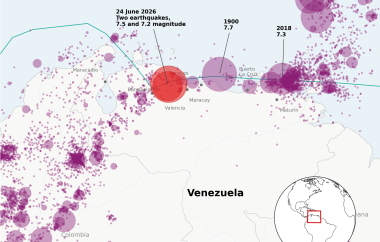
The 24 June 2026 Venezuela Earthquake Doublet

On 24 June 2026, northern Venezuela experienced a rare and damaging earthquake doublet near...
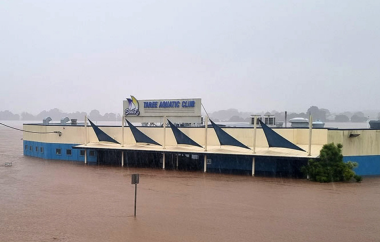
The Taree Aquatic Club during the Mid North Coast and Hunter floods looking toward the severely impacted suburb of Glenthorne on the far bank (Image shared with Risk Frontier's survey team by member of Aquatic Club cleanup staff).
6 Minute Read

Australia’s Most Costly Perils of 2025

Rising extinction risk is increasingly driven by human-made threats, especially emerging technologies like AI....
Confluence of Risks Nuclear War and Global Existential Threats - Risk Frontiers
7 Minute Read

Confluence of Concerns about the Risk of Nuclear War

Rising extinction risk is increasingly driven by human-made threats, especially emerging technologies like AI....

Interested in learning more about our detailed Australian bushfire & grassfire loss model?

The latest release of FireAUS, modelling bushfire and grassfire risk across Australia, represents another leap forward in the quantification of risk at the location and portfolio level. Risk Frontiers are the local, Australian-based experts and have used our recognised artificial intelligence, machine learning and climate modelling capabilities, decades of peer reviewed research and on the ground post-event surveys to continue to evolve our leading edge fire loss model.

Soon to be released FireAUS 4.0 will continue from FireAUS 3.2’s Australia wide coverage at the individual address level and can report losses at address level, SA1, postcode, and Cresta zones.

Our team is ready to answer your questions.

 In the spirit of reconciliation, Risk Frontiers acknowledges the Traditional Custodians of the land throughout Australia and their deep connections to land, sea, and community. We pay our respects to their Elders, past and present, and extend that respect to all Aboriginal and Torres Strait Islander peoples today.